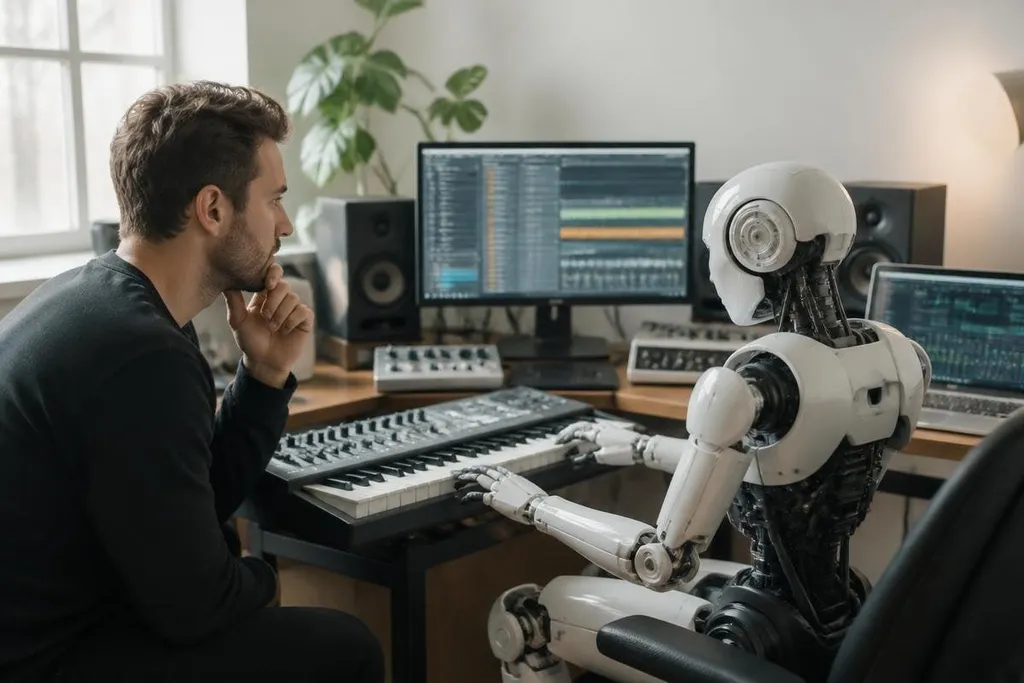
A robot can generate a melody, set a rhythm, and arrange several instruments without a person placing every note. The harder question is why the music should sound that way, and what the piece is meant to say.
For a composer, producer, or music student, that difference matters. A machine may finish a track quickly, but speed does not tell you if the result has a clear purpose.
- Software can select notes, rhythms, sounds, and song structures.
- A physical robot adds motors, sensors, and the ability to play instruments.
- Human review remains useful for meaning, taste, and final choices.
What a music-making robot actually does
The word robot covers two different systems here. One is software that creates or arranges sound. The other is a physical machine that moves keys, strings, drums, or other controls.
Software works with patterns. It can learn how notes tend to follow one another, then produce a new sequence that fits a chosen style. It can also change tempo, repeat a section, add harmony, or assign parts to different instruments.
That process can sound creative, but the machine is working from rules, examples, or instructions set by people.
It has no personal memory of a lost friend, a crowded room, or a day that changed how a song should feel. Those experiences often shape human music before the first note is written.
A physical robot faces a second problem. Playing music needs careful timing and control. A robotic hand must press a key with enough force, release it at the right moment, and repeat that action across a whole performance. The sound may be correct while the motion looks stiff or uneven.
Where machines can help
A robot can be useful when the task has clear limits. Give the system a tempo, a scale, a group of instruments, and a preferred mood, and it can create many versions for a person to review.
That makes sense for early sketches, background tracks, game sound, and teaching exercises. A student can ask for a short melody, change one part, and compare the result with another version. The machine handles repetition while the student listens for what works.
The same process can help a composer test structure. A system might suggest a different chorus length or move a melody into another register. Those choices are easy to inspect because the person can accept them, change them, or discard them.
Once a robot controls a physical instrument, the test needs more than the finished recording. It should name the instrument, control method, number of human edits, and test date, since those details show how much of the music came from the system. That record is worth checking in Robot 24 before comparing the robot’s choices with a composer’s.
Where the comparison with people breaks down
Music has a technical side, but listeners also respond to timing, restraint, and choice. A person may hold a note longer because the next word matters. A drummer may play slightly behind the beat to change the feel of a section.
A machine can copy those patterns if they appear in its instructions or training material. That does not show that it understands the reason behind them. The difference becomes clearer when a song needs a choice that has no obvious rule.
There is also a question of credit. If a system makes a melody from patterns found in many recordings, the person using it needs to know what shaped the result. Without that information, it becomes harder to judge the work or explain who made the important decisions.
The machine may also produce a polished track that says very little. Clean sound and correct timing can hide a weak idea. I’d use a robot as a musical assistant, not as the author of a finished song.
A practical way to judge the result
Before you keep music made by a robot, check the part that software cannot settle on its own:
- Purpose: Can you describe what the piece is trying to do in one sentence?
- Choice: Which notes, sounds, or changes were selected by a person?
- Control: Can you edit the tempo, structure, instruments, and mood?
- Source: Do you know what examples, rules, or instructions shaped the output?
- Performance: If a physical robot played it, did its timing support the music?
These checks move the focus from “Can it make sound?” to “Does this piece work for its intended use?” That is a fairer test for a machine, because a short background track has a different job from a concert performance.
Robots can compose in the practical sense: they can build musical sequences and arrange sounds. Human composers remain responsible for the reason behind those choices, and that responsibility is the part machines have not shown they can take over.